
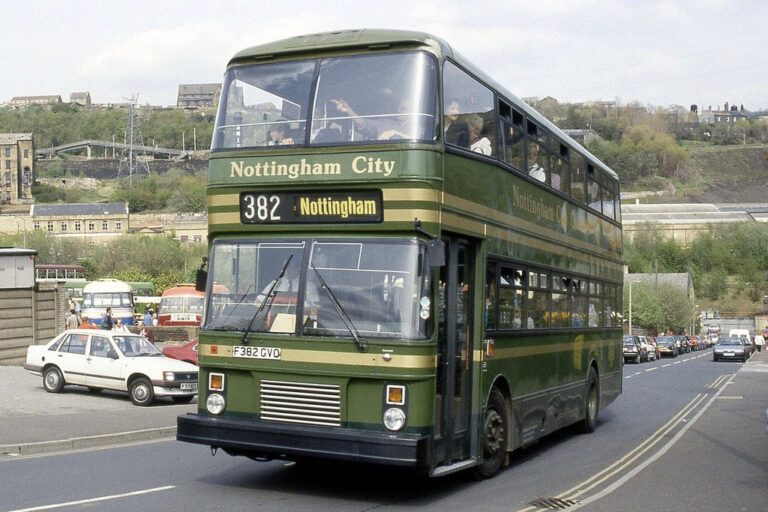
382 F382 GVO Later VIL3382
New To: Nottingham City Coaches
Chassis: Leyland DAB LDTL11/1R DD00126
Body: East Lancs CH43/37F A8125
Status: Awaiting Restoration
Delivered in 1989 as part of a batch of ten vehicles, 382 was supplied new to Nottingham City Transport with bodywork by East Lancashire Coachbuilders. Of the ten buses delivered, five were constructed to standard bus specification for stage carriage duties, while the remaining five — including 382 — were fitted with high-backed coach seating for private hire and contract work. This dual-purpose specification allowed the fleet to cover a wide range of operational requirements, from everyday city services to longer-distance and premium hires.
The vehicle is built to what became known as the “Nottingham Standard” design, a styling and engineering approach that gave Nottingham’s buses a distinctive and unified identity for many years. Nottingham Standard features included an angled destination display for improved visibility, higher internal ceilings to enhance passenger comfort, a substantial front bumper designed to reduce accident damage, curved upper deck front windows, and curved windscreens that created a modern and recognisable profile. As with earlier examples of the design, a high degree of component standardisation was incorporated to simplify maintenance procedures and reduce parts complexity across the fleet.
382 is built on the Leyland-DAB Lion chassis, a mid-engined double-decker produced by Leyland Bus between 1986 and 1988. The Lion was based on a design by Danish Automobile Building (DAB) and represented an alternative approach to conventional rear-engined layouts. In total, only 32 examples were constructed, making it one of the rarer British double-deck chassis types of the period. The type was purchased by Clydeside Scottish, Eastern Scottish and Nottingham City Transport, and was intended to compete directly with the mid-engined Volvo Citybus chassis, two examples of which are also preserved within our collection.
As delivered, 382 was finished in Nottingham City Coaches’ distinctive Harrods Green livery, reflecting its intended use on private hire and coaching duties. In later years it was repainted into the standard NCT Green and Cream fleet livery, bringing it visually in line with the main service fleet. A few years prior to withdrawal, the vehicle was re-registered as VIL3382. This unusual step was taken when certain contract work required newer-registered vehicles, and no suitably modern buses were available; the Lions were therefore re-registered in order to present a newer appearance on paper, effectively disguising their true age while continuing in service.
Following withdrawal from Nottingham service, 382 passed to Andrews of Tideswell, where it was repainted into the cream livery it carries today. It subsequently moved to Moving People of Accrington, who applied their own vinyl branding while retaining the cream base colour. After its operational career concluded, the vehicle was acquired for preservation and has since been generously donated to the charity.
Today, the Leyland-DAB Lion is an exceptionally rare survivor type, with only five examples known to remain. Notably, two of these are preserved within our collection: 382 and its sister vehicle 383, registered F383GVO and later VIL2983. The survival of both sister buses represents a significant contribution to the preservation of this short-lived but distinctive chassis design, as well as to the later evolution of the Nottingham Standard era.


