
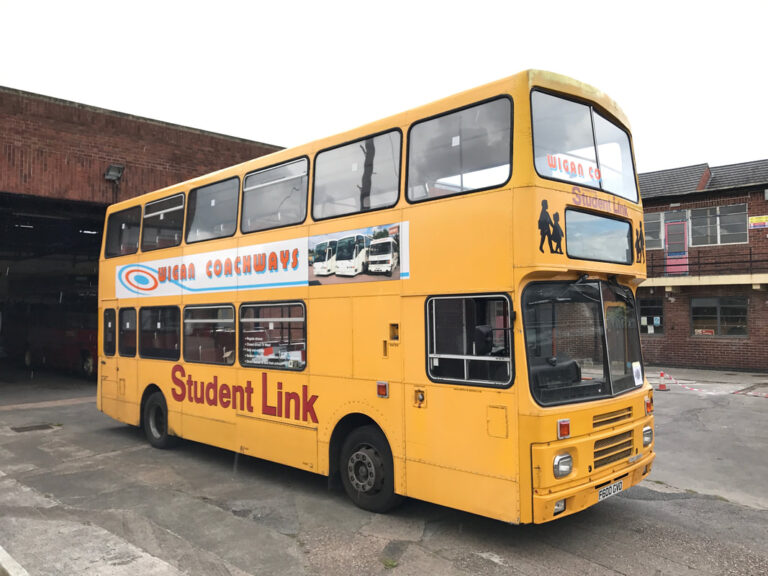
600 F600 GVO
New To: Trent Buses
Chassis: Volvo D10M-50 YV31MGC18JA018748
Body: Alexander RV38/2088/1 H47/37F
Status: Undergoing Restoration
600 was delivered to Trent Buses at the end of 1988, as part of a batch of 12 similar buses. These vehicles represented the first significant fleet investment by the newly privatised company, marking an important milestone in Trent’s history. Following the 1987 management buyout from the National Bus Company, there was a clear desire to modernise the fleet and present a confident, forward-looking image. 600 was actually new to Hucknall Garage, reflecting the importance of the depot within Trent’s network at the time and signalling the company’s commitment to investing in its core operating areas.
600 is fitted with an Alexander R type double deck body, seating 47 passengers upstairs and 37 in the lower saloon, giving a total capacity of 84. The body design was modern for its time, with large windows, a bright interior and a distinctive squared profile typical of late-1980s Alexander products. The chassis was a reworked version of Volvo’s successful B10M coach chassis, which featured uprated suspension and low-profile tyres enabling the chassis to carry a double deck body. The B10M was already well proven in coach applications, and its adaptation for double deck use combined reliability with improved ride quality.
The fact that the engine was mounted horizontally under the floor meant that no engine compartment intruded into the saloon. This allowed the full lower deck to be used for passenger accommodation, increasing seating capacity and improving passenger flow. The underfloor engine layout also contributed to smoother weight distribution and a comparatively quiet interior environment, both welcome improvements for passengers and crew alike.
600 entered service at Hucknall and spent the majority of its working life with Trent based there and also at Sutton Junction. It regularly worked routes between Mansfield and Nottingham, corridors that demanded high-capacity, reliable double deck vehicles. As one of the first post-privatisation purchases, 600 would have symbolised a new chapter for the company, combining modern engineering with a fresh corporate identity.
When new, 600 was finished in a striking Silver, Red and Black livery, a bold departure from earlier colour schemes and designed to signal change and renewal. In later years it was repainted into the more traditional Red and Cream livery, reflecting a shift back towards heritage-inspired branding. During this period the seats were also re-trimmed into the standard Alexander pattern, replacing the earlier brown trim and bringing the interior into line with contemporary fleet standards.
Upon withdrawal, 600 and other members of the batch passed to Plymouth Citybus, then to Preston Bus, before eventually being acquired by Wigan Coachways. Like many vehicles of its era, it enjoyed a varied second career away from its original operating area, demonstrating the durability and continued appeal of the Volvo B10M/Alexander R combination.
It was bought for preservation at the end of 2016 by Mark Butler, who kindly donated it to Nottingham Heritage Vehicles Charity. This ensured that the vehicle returned to its home area and would be safeguarded for future generations. Since joining the collection, 600 has undergone mechanical attention, including the renewal of the rear brake drums and linings, addressing essential safety and reliability requirements.
It is currently undergoing restoration and will eventually be repainted into the livery in which it was first delivered to Trent in 1988. Once completed, 600 will stand not only as an example of late-1980s double deck design, but also as a tangible reminder of Trent’s transition from state ownership to independent operation — a pivotal period in both the company’s and the wider industry’s history.


