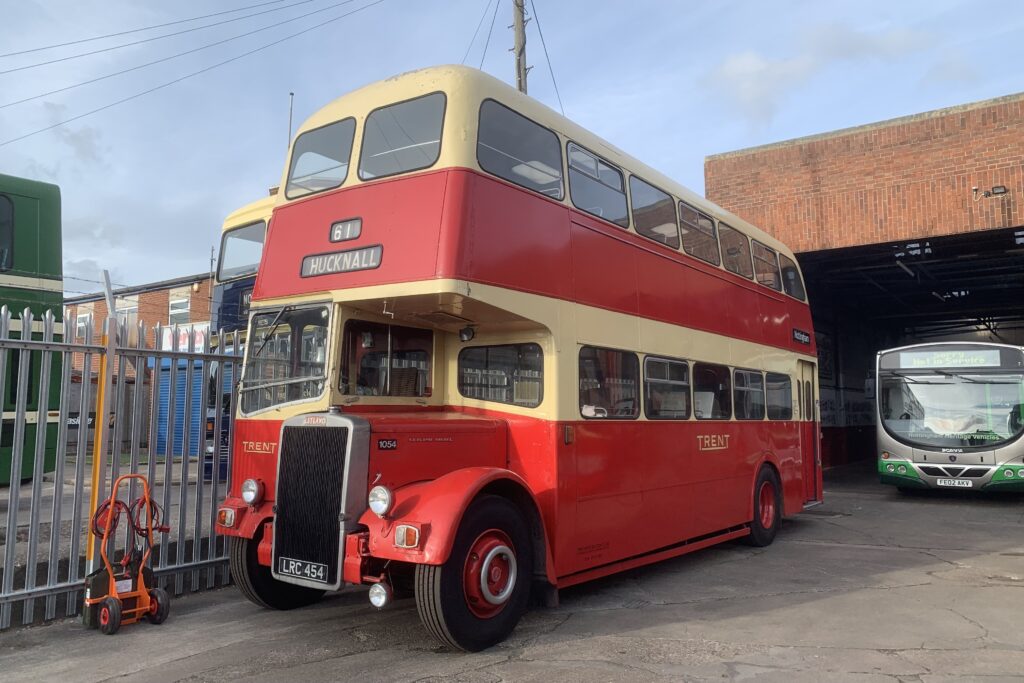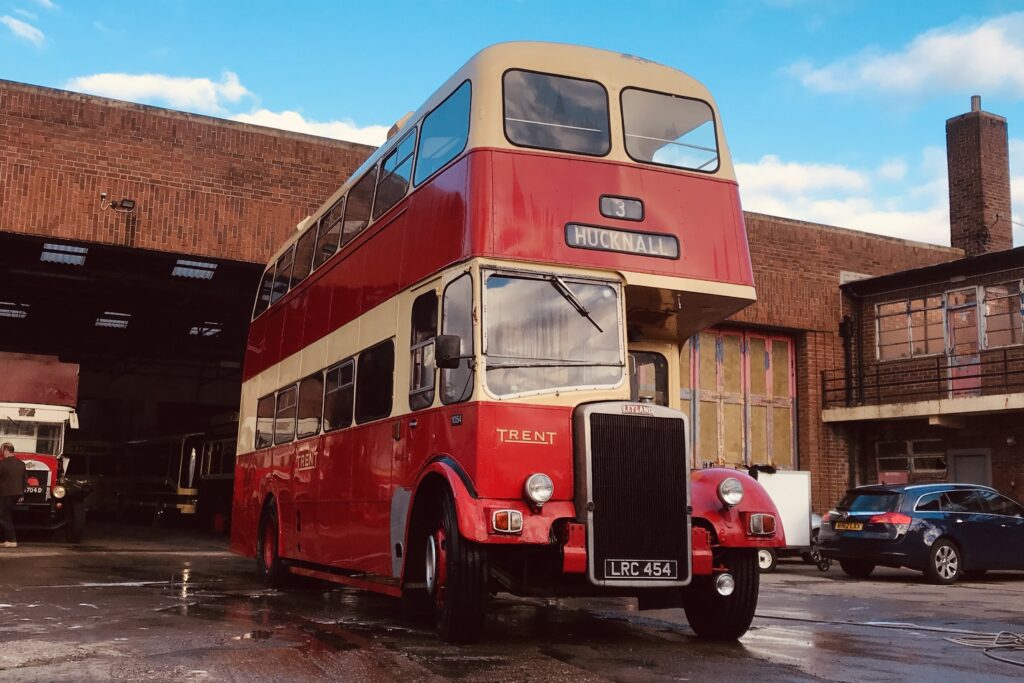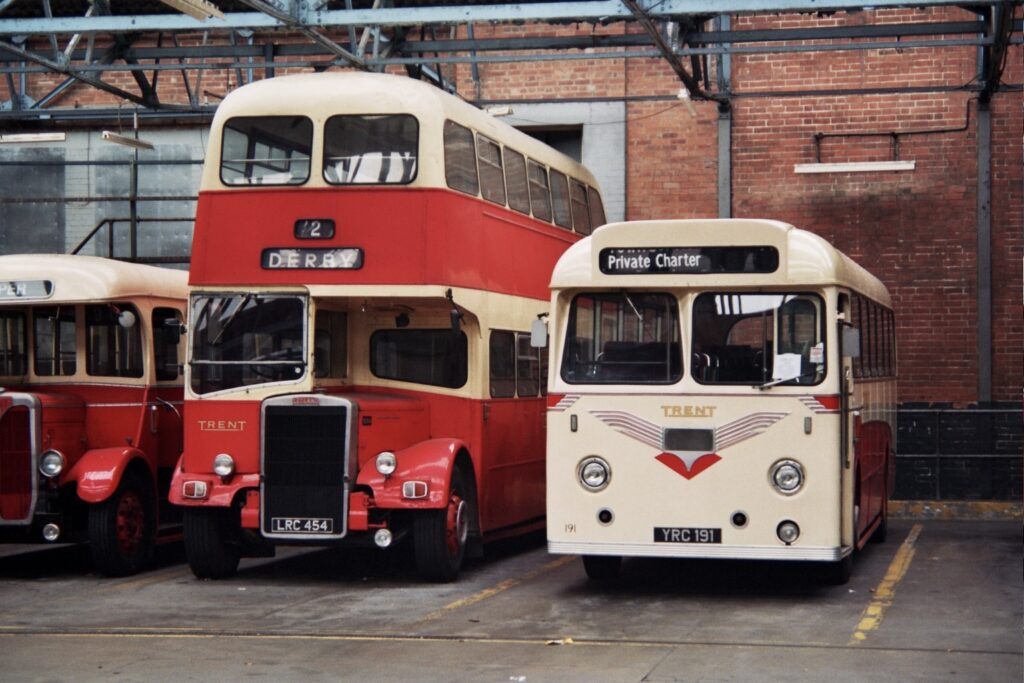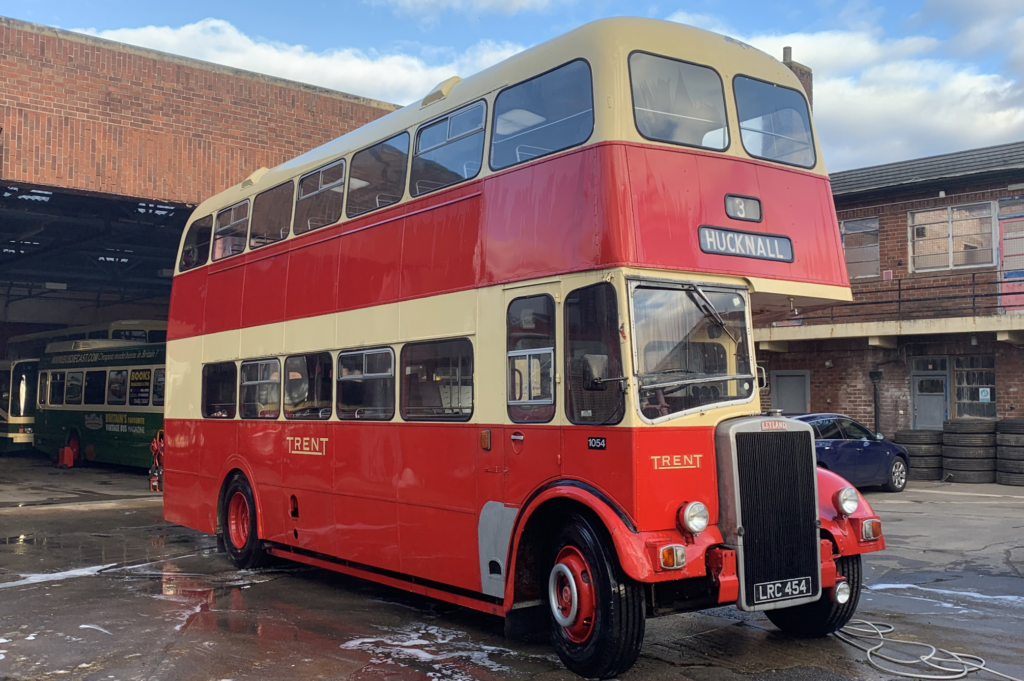
1054 LRC 454
New To: Trent Motor Traction Company Ltd
Chassis: Leyland Titan PD3/4 572846
Body: Willowbrook 57985 H41/32RD
Status: Awaiting Restoration
Delivered in 1958 as part of a batch of 22 similar vehicles, 1054 is fitted with a Willowbrook double deck body, seating a total of 73 passengers, 41 upstairs and 32 downstairs. This batch of vehicles were the first in the Trent fleet to take advantage of a change in the Construction and Use Regulations which allowed vehicles to be up to 30 feet long. This legislative change was significant at the time, as it enabled operators to increase passenger capacity without adding additional vehicles to the fleet. For Trent, the extra length translated directly into greater efficiency on busy routes, particularly during peak periods, while maintaining the robust and traditional appearance associated with late-1950s double deckers. The Willowbrook bodywork provided a smart, well-proportioned design and a comfortable interior suited to the demands of stage carriage work across the company’s operating area.
1054 had an uneventful service life and was withdrawn from service in 1976 as part of the fleet renewal programme. After nearly two decades of steady and reliable operation, it was set aside in favour of newer, more modern vehicles that reflected changing passenger expectations and operational standards. Here its life with Trent would have ended, had it not been the disastrous fire at Trent’s Meadow Road Derby garage on the night of 23rd July 1976. The fire destroyed forty buses and damaged twelve others, representing a devastating loss to the fleet and creating an immediate vehicle shortage.
This fire led to the reinstatement of a number of recently withdrawn buses, of which 1054 was one. Vehicles that had only recently been retired were hastily assessed, repaired where necessary, and returned to service to maintain operations. In October 1977, 1054 was modified for use as a driver training bus. At the time, if a driver required an “all types” licence — enabling the driving of any bus — the test had to be taken on a manual gearbox vehicle. As semi-automatic transmissions were becoming more common, suitable manual buses were increasingly scarce, making 1054 an ideal candidate for conversion.
Part of this conversion involved the removal of the destination equipment and the bulkhead behind the driver, creating improved visibility and space for instruction. The bus was also repainted into the all-over white service vehicle livery, clearly distinguishing it from the operational fleet. In its new role, 1054 would have trained a generation of drivers, many of whom would go on to spend their careers within the company.
In 1987, 1054 was repainted into its original livery of Ayres Red and Cream to promote Trent’s heritage and celebrate the company’s history. This marked the beginning of a new chapter for the vehicle, transitioning from a purely functional training role to that of a heritage representative. It was adopted by a group of Fitters and Drivers who took great pride in its upkeep, and it began appearing at rallies up and down the country, representing Trent at preservation events and enthusiast gatherings. As part of the restoration, the bulkhead and destination equipment were replaced, returning the vehicle much closer to its original 1958 condition and appearance.
For a number of years, 1054 saw little regular use, being retained largely for special occasions and heritage appearances. However, it played a notable role in 2013 when it was used on free bus services as part of Trent’s 100th birthday celebrations, allowing members of the public to experience travel as it would have been in the late 1950s. Events such as these demonstrated the enduring affection for traditional double deck buses and the important role they played in the region’s social history.
When NHVC took on Hucknall garage we were asked to house the vehicle along with Tiger Cub 191. This ensured that 1054 would remain preserved within its traditional operating area and safeguarded for future generations. Its survival is particularly significant given how close it came to permanent withdrawal in 1976, and it now stands as an important reminder not only of late-1950s fleet development, but also of the resilience shown by the company following the Meadow Road fire.