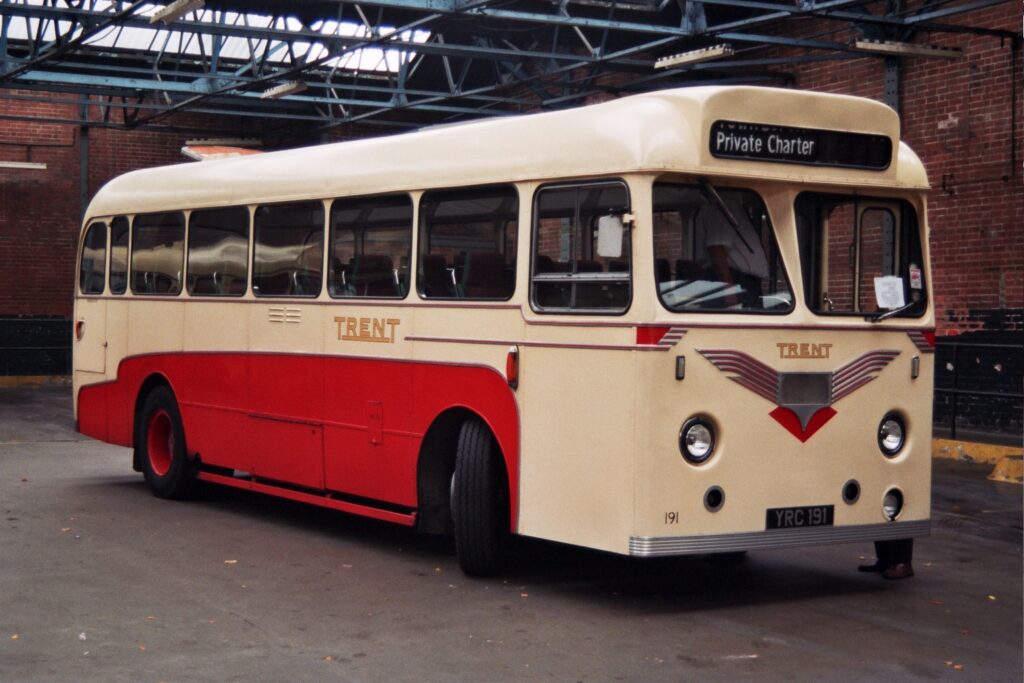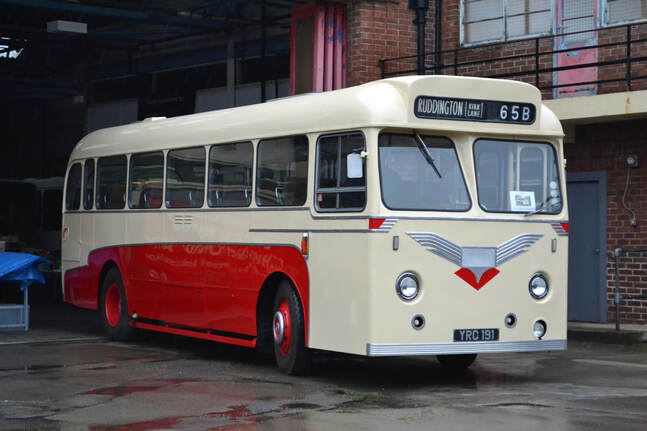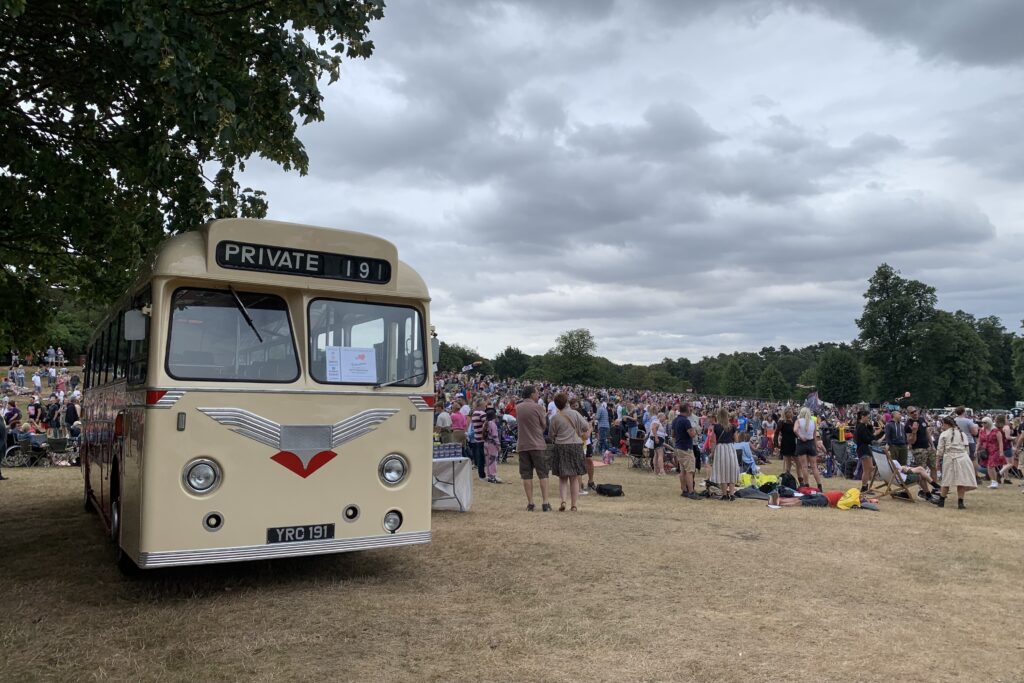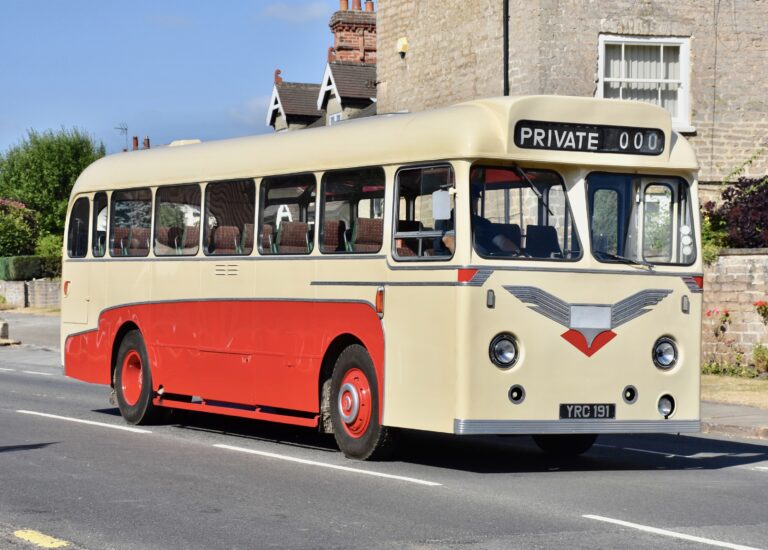
191 YRC 191
191 YRC191
New To: Trent Motor Traction Company
Chassis: Leyland Tiger Cub PSUC1/1 617720
Body: Alexander DP41F AR6829
Delivered in 1962 as part of a batch of 20 similar vehicles, 191 is fitted with a Dual Purpose (DP) body, which meant it was intended mainly for use on bus services, but it is fitted with more comfortable seats and a luggage boot so it could be used on express services to coastal resorts at weekends. This dual-purpose concept was popular during the early 1960s, allowing operators to maximise fleet flexibility — hard-working service buses during the week could be quickly turned around for longer-distance excursions and seaside relief services when demand required. The additional comfort offered by the upgraded seating, combined with the practical luggage accommodation, made 191 particularly well suited to holiday traffic and private hires as well as its everyday stage carriage duties.
191 worked from most of Trent’s depots during its working life, reflecting the fleet’s operational flexibility and the vehicle’s reliability. It became a familiar sight across the company’s operating area before eventually being withdrawn from Ashbourne depot in 1977 after 15 years of service. Following withdrawal, the bus began a very different chapter in its life when it passed to a fruit farm in Scotland. There it was used to transport seasonal workers to and from the fields — a role far removed from seaside excursions but one that once again demonstrated the practicality, durability and continued usefulness of traditional heavy-duty bus construction.
Trent bought 191 back from the fruit farm in 1989, recognising both its historical significance and its continuing mechanical potential. The intention was to use the bus as a driver trainer. This requirement had arisen because a need to train drivers on manual gearbox buses had emerged following the introduction of several manual transmission Iveco minibuses into the fleet. At the time, much of the fleet consisted of automatic vehicles, and suitable manual training vehicles were in short supply.
The bus was therefore restored to near-original condition in Trent’s Uttoxeter Road works, carefully returning its external appearance while adapting it internally for its new training role. This included the installation of a removable brake control for the instructor, enabling safe supervision of trainee drivers. The sympathetic restoration ensured that the vehicle retained its period character while meeting contemporary operational needs.
In 1990 the law changed however, requiring driver trainer buses to be capable of more than 50mph. Unfortunately, 191 has a top speed of 45mph, which meant it was no longer eligible for use as a trainer almost as soon as the conversion had been completed. This unexpected legislative change curtailed its intended second career before it had properly begun.
Trent kept the bus licensed for passenger service, and although it remained operational, it saw only occasional use. As newer vehicles entered the fleet and operational demands evolved, 191 gradually became surplus to requirements. By 2015 it had been parked up and was in need of engine repairs, its future once again uncertain.
NHVC were asked to provide a home for the bus when we moved into Hucknall garage, ensuring that this historically significant vehicle would be preserved locally for the enjoyment of the public. The engine was repaired and the bus repainted at our expense, returning it to a condition worthy of its heritage. Considerable time, effort and funding were invested to secure its long-term future.
It now just awaits the fitting of red beading on the metal trim — a very time-consuming and intricate job requiring patience and care to achieve a correct period finish — along with the application of fleet names. Once completed, 191 will once again present the dignified and smart appearance that characterised Trent vehicles in service, standing as a proud example of 1960s dual-purpose design and an important part of the region’s transport heritage.